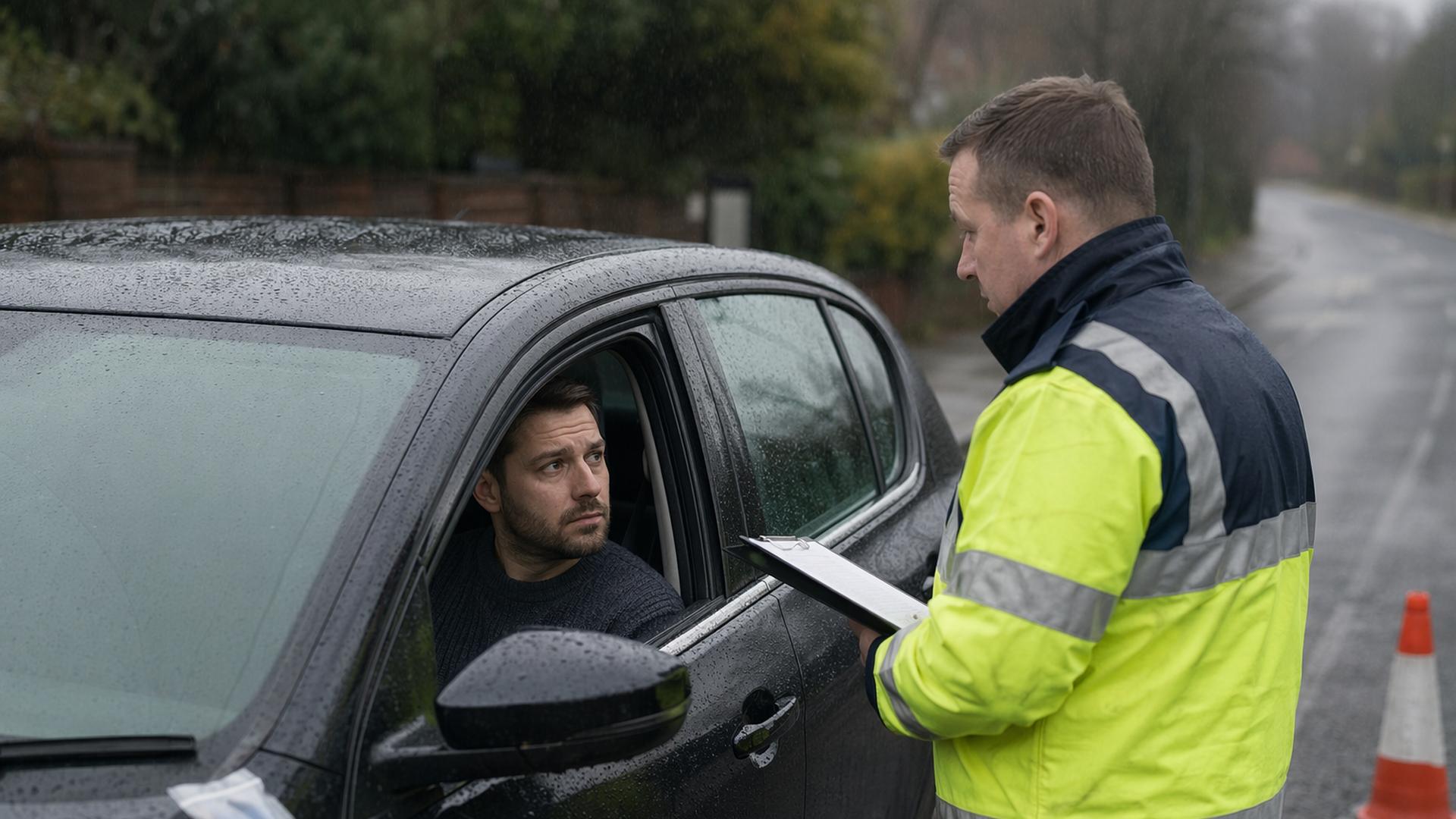
7 Important Consequences After a Roadside Drug Test Failure in the UK
Published by Drug Driving Solicitors — specialist defence lawyers for drug driving charges across England and Wales.
Failing a roadside drug test is a moment that can feel disorienting and alarming, particularly if you are unfamiliar with how the legal process in England and Wales actually works. What follows is not a single event but a sequence of formal steps, each with its own rules, rights, and potential consequences that are worth understanding clearly.
This article walks through seven of the most significant consequences you may encounter after a roadside drug test failure, presented in plain terms without losing the important legal detail. Whether you are at the very beginning of this process or further along, knowing what each stage involves can help you make better decisions and seek the right advice at the right time.
1. You Are Arrested and Taken to a Custody Suite
Being placed under arrest is, for many people, the most immediately unsettling part of the process. It does not mean you will ultimately be convicted, but it does mean the situation has moved from roadside to formal legal procedure, and how you respond from this point matters considerably.
What an Arrest for Drug Driving Means in Practice
An officer may arrest you under Section 5A of the Road Traffic Act 1988 if a preliminary drug test produces a positive result, or if they reasonably suspect that you are driving while impaired by a drug. The arrest gives the police the authority to take you to a designated custody suite for further testing. It is a procedural step, not a finding of guilt.
Your Rights From the Moment of Arrest
From the point of arrest, you are entitled to be informed of the reason for your detention, to have someone notified that you are in custody, and critically, to speak with a solicitor free of charge. This right to free legal advice is one you should exercise without hesitation. Anything you say from this point can be used in evidence, and a solicitor can advise you on how to respond during any interview.
The Role of the Custody Sergeant
When you arrive at the custody suite, a custody sergeant will formally authorise your detention and record your details. They will explain your rights, ask about any medical conditions, and ensure you are treated in accordance with the Police and Criminal Evidence Act 1984 (PACE) and its associated codes of practice. The custody sergeant acts as an independent check on how the process is managed.
How Long You Can Be Detained
In most drug driving cases, detention at the custody suite is relatively short, typically a few hours. The police have an initial period of 24 hours in which to complete their enquiries before they must either charge you or release you. Extensions beyond 24 hours require senior officer authorisation and are uncommon in straightforward drug driving matters.
What to Prioritise While You Are There
The most important thing you can do during this phase is to speak with a solicitor before any interview or before making any significant decisions about the process ahead. Remaining calm and cooperative with custody procedures, while taking legal advice before answering substantive questions, is almost always the right approach.
2. The Roadside Device Produces a Positive Reading
The roadside drug test is often the first moment a driver realises that the encounter with police is going to become something more serious. Understanding what the device actually does and what a positive result does or does not establish is important context for everything that follows.
How Roadside Drug Testing Devices Work
The devices used at the roadside are known as preliminary drug testing equipment, and only specific models are type-approved for use by police in England and Wales. The most widely used is the Dräger DrugTest 5000, which analyses a saliva sample for the presence of certain controlled drugs. These devices are designed to screen for drugs rather than to provide a definitive evidential reading.
Which Drugs the Device Can Detect
Type-approved roadside devices are configured to screen for a prescribed list of controlled drugs, including cannabis (specifically delta-9-tetrahydrocannabinol, known as THC), cocaine, heroin, and certain other substances. The device does not test for every controlled drug and cannot determine the precise concentration in your system. A positive reading simply indicates the presence of that substance above the device's detection threshold.
What a Positive Reading Does Not Prove
A roadside positive is a screening result, not an evidential one. It cannot be used as standalone proof of a drug driving offence and does not, by itself, establish that you were above the legal limit. The evidential standard required for a conviction can only be met through laboratory analysis of a blood sample taken later in the process. This distinction is significant and frequently misunderstood.
The Possibility of a False Positive
While type-approved devices are rigorously tested, no screening tool is infallible. Cross-reactivity with certain medications, environmental factors, and device condition can all theoretically affect a result. If you believe a positive result is anomalous, it is important to mention this to your solicitor as part of the wider review of your case.
What Happens Immediately After a Positive Reading
Following a positive roadside result, the officer will typically administer a statutory warning before requiring you to accompany them to a custody suite. The positive reading initiates the next phase of the process rather than concluding it, and you retain all of the legal rights that apply from the moment of arrest.
3. The Officer Administers a Statutory Warning
Before requiring a driver to undergo a preliminary drug test, a police officer is legally required to administer a formal warning. This step may seem procedural, but it carries real legal weight and has been the foundation of successful challenges in court.
What the Statutory Warning Actually Is
The statutory warning is a prescribed form of words that an officer must communicate to a driver before requiring them to provide a saliva sample for a roadside drug test. The warning informs the driver of the requirement, the basis on which it is being made, and the consequences of failing to comply. It is a legal safeguard built into the testing process, not an optional courtesy.
Why the Warning Must Be Given Correctly
The requirement to administer the warning correctly is not merely administrative. If the warning is not given, is given in a materially incomplete form, or is delivered in circumstances where the driver cannot reasonably be expected to understand it (for example, due to a language barrier or impairment), this may constitute a procedural defect that a defence solicitor can raise. Courts have found in favour of defendants on this basis.
What Failure to Comply With the Warning Means
If a driver refuses to provide a saliva sample after a lawful warning has been given, they may commit a separate offence of failing to cooperate with a preliminary test under Section 6(6) of the Road Traffic Act 1988. This is worth noting because some drivers assume that refusing the roadside test avoids the issue entirely, when in practice it can create a separate legal problem.
The Warning in the Context of the Wider Process
The statutory warning sits at a specific point in the timeline, between the officer's initial decision to require a test and the administration of the test itself. Any solicitor reviewing a drug driving case will examine this stage as part of a systematic check of every procedural step, because even a technically strong evidential case can be undermined by a flaw at this earlier point.
Keeping a Clear Account of What Was Said
If you are placed in a situation where a statutory warning is administered, try to keep a clear mental note of what was said, in what order, and the circumstances in which it was delivered. Details that seem minor at the time can become relevant later, and the earlier you share them with a solicitor, the better placed they are to assess their significance.
4. A Healthcare Professional Takes a Blood Sample
The taking of a blood sample at the custody suite is the pivotal step in the entire process. It is the blood result, not the roadside test, that will ultimately determine whether you face a criminal charge. This stage is governed by strict rules, and compliance with those rules on the part of the police is not optional.
Who Is Authorised to Take the Sample
A blood sample for evidential purposes in a drug driving case must be taken by a healthcare professional, typically a registered forensic physician or a specially trained nurse. The officer dealing with your case cannot take the sample themselves. The involvement of a qualified medical professional is a legal requirement, and any deviation from this can affect the admissibility of the sample.
The Two-Part Sample Procedure
When the blood sample is taken, it is divided into two parts. One part is retained by the police and sent for laboratory analysis. The other part, known as the defendant's part or Part B, must be offered to you. Accepting this second sample and having it independently analysed is an important safeguard: it allows your solicitor to commission a counter-analysis if the results from the police laboratory are disputed.
Your Right to Refuse and Its Consequences
You are legally required to provide a blood sample when requested at the custody suite under Section 7A of the Road Traffic Act 1988, unless you have a reasonable excuse. Reasonable excuses are interpreted very narrowly by the courts and a medical reason must be properly evidenced. Refusing without legal justification is itself a criminal offence, carrying the same minimum penalties as a drug driving conviction. Always speak to a solicitor before deciding whether to refuse.
Medical Conditions and the Sampling Process
If you have a genuine medical condition that makes venepuncture difficult or inadvisable, for example, a severe needle phobia supported by medical evidence, or a blood clotting disorder, this should be communicated clearly and documented at the time. These circumstances may give rise to a lawful refusal, but they must be supported by evidence and assessed carefully with legal advice rather than asserted informally in custody.
Chain of Custody Begins Here
The integrity of the blood sample is central to any subsequent prosecution. From the moment the sample is taken, a chain of custody must be established and maintained, documenting who handled the sample, how it was stored, and how it was transported to the laboratory. Breaks or irregularities in this chain are one of the grounds most commonly reviewed by defence solicitors when building a challenge to the evidence.
5. The Blood Sample Is Sent for Laboratory Analysis
Once the blood sample has been taken and properly stored, it is transferred to a forensic laboratory for analysis. This stage is largely invisible to the person under investigation, but it is one of the most determinative in the entire process, and it is also where significant delays tend to occur.
How Laboratory Analysis Works
The laboratory analysis of a blood sample in a drug driving case involves rigorous toxicological testing to identify and quantify any controlled drugs present. The scientists use a two-stage process: an initial screening followed by confirmatory analysis using a technique called gas chromatography-mass spectrometry (GC-MS). This confirmatory stage is considered the gold standard for forensic drug identification and is what gives the result its evidential weight.
The Legal Limits Being Tested Against
England and Wales operate a "specified limits" regime under Section 5A of the Road Traffic Act 1988. For each of the listed controlled drugs, there is a prescribed blood concentration limit. For example, the limit for THC (cannabis) is 2 micrograms per litre of blood, and for cocaine it is 10 micrograms per litre. The laboratory's job is to determine whether the concentration in your sample exceeds these statutory thresholds.
Why Results Can Take Months to Arrive
The main source of delay in drug driving cases is almost always the laboratory stage. Police forces contract with nominated forensic laboratories, and those laboratories often face significant workloads. A wait of several weeks to several months for results is common. During this period, no charge can be made, and most people under investigation find themselves in a period of uncertainty that can feel prolonged. This is normal, and it does not indicate anything positive or negative about the likely outcome.
Challenging the Laboratory Analysis
The laboratory report is not beyond challenge. Defence solicitors can scrutinise the methodology used, the calibration of equipment, the qualifications of the analyst, and the handling of the sample prior to analysis. Using the defendant's part of the blood sample for an independent counter-analysis is one of the most powerful tools available to the defence, and it can produce results that differ materially from those of the police laboratory.
What Happens When the Report Is Received
Once the laboratory report is received by the police, the investigation moves toward a charging decision. The officer in the case will review the results alongside any other evidence gathered and put a file to the Crown Prosecution Service (CPS) or make a charging decision directly, depending on the complexity of the case. This transition from investigation to charging decision is the next significant milestone.
6. You Are Charged or Told No Further Action Will Be Taken
The charging decision is the point at which the investigative phase of the process formally ends and, if a charge is brought, the criminal justice process begins. For some people, this stage brings relief in the form of a no further action (NFA) decision. For others, it marks the start of proceedings that will ultimately be heard in court.
What "No Further Action" Actually Means
A no further action decision means the police or CPS have concluded that there is insufficient evidence to charge, or that it would not be in the public interest to do so. In drug driving cases, NFA outcomes can arise for a number of reasons: the blood analysis may have returned a result below the legal limit, a procedural defect may have undermined the evidence, or the medical defence may have been accepted at an early stage. An NFA is not a formal acquittal, but it does bring the matter to a close without any criminal charge.
The Most Common Charge: Section 5A
Where the blood result exceeds the legal limit for a controlled drug, the most common charge is under Section 5A(1)(a) of the Road Traffic Act 1988, which covers driving or attempting to drive with a controlled drug in the blood above the specified limit. This is distinct from the impairment-based offence under Section 4, which requires evidence of actual impairment to driving rather than a concentration above a threshold.
Bail Conditions at the Charging Stage
If you are charged, you will typically be released on bail pending your first court appearance. Bail conditions in drug driving cases are not always imposed, but they can include restrictions such as not driving. It is important to read any bail conditions carefully and comply with them fully, as a breach of bail is a separate criminal matter.
Accepting a Caution Instead of a Charge
In some circumstances, the police may offer a simple caution rather than a charge, particularly for first-time offenders. A caution is not a conviction, but it is a formal admission of guilt and will appear on your criminal record. Before accepting any caution, you should take legal advice, as accepting one in circumstances where the evidence is weak could be a significant strategic error.
The Importance of Early Legal Advice at This Stage
Whether you receive an NFA or a charge, this is a moment where specialist legal advice adds substantial value. If charged, a solicitor can assess the strength of the case against you, advise on plea, and begin preparing a defence that covers every aspect of the evidence gathered since the roadside stop. The earlier that preparation begins, the more thorough it can be.
7. Your Case Is Heard at the Magistrates' Court
Drug driving offences under Section 5A are summary offences, which means they are tried in the Magistrates' Court rather than the Crown Court. This is where the matter is ultimately decided, whether by a guilty plea, a not guilty plea followed by a trial, or in some cases a combination of both depending on how proceedings develop.
How Magistrates' Court Proceedings Work
The Magistrates' Court is presided over by either a bench of lay magistrates or a single District Judge. There is no jury. If you plead not guilty, a trial date will be set, at which the prosecution will present its evidence and your defence will have the opportunity to challenge it. The burden of proof remains on the prosecution throughout: it is for them to prove the case beyond reasonable doubt, not for you to prove innocence.
The Minimum Penalties for a Drug Driving Conviction
A conviction under Section 5A carries a mandatory minimum driving disqualification of 12 months. The court will also typically impose a fine, which is assessed against your weekly income, and may add penalty points or impose a community order or, in more serious cases, a custodial sentence. The disqualification is mandatory and cannot be reduced below 12 months except in very narrow exceptional hardship circumstances.
Exceptional Hardship Arguments
In some cases, a defendant may argue that the consequences of disqualification go beyond the ordinary hardship expected to follow a ban and amount to exceptional hardship, for example, the loss of a livelihood or severe impact on a vulnerable dependent. These arguments must be carefully prepared and properly evidenced. They do not prevent a conviction, but they can influence the length of the disqualification imposed.
Entering a Guilty Plea and Its Implications
Entering a guilty plea at the earliest opportunity typically attracts a sentencing reduction of up to one third. If the evidence against you is strong and a conviction is likely, an early guilty plea may be the most pragmatic course of action, minimising both the length of the ban and any financial penalty. A specialist solicitor will advise on this honestly and clearly rather than simply advocating for a not guilty plea in all circumstances.
Life After Conviction
Beyond the immediate penalties, a drug driving conviction carries longer-term consequences. The DG10 offence code remains on your driving licence for 11 years, is visible to insurers, and can affect certain types of employment, professional licensing, and international travel. Understanding the full scope of these implications before any decision is made about how to respond to a charge is one of the most important reasons to obtain specialist legal advice at the earliest possible stage.
What This Process Means for You Going Forward
Failing a roadside drug test in the UK sets in motion a formal, multi-stage legal process that unfolds over weeks or months. Each step, from the administration of the statutory warning to the hearing at the Magistrates' Court, is governed by rules that must be followed by the police and prosecution as well as by the defendant. Understanding those rules, and knowing where they can be tested, is at the heart of effective drug driving defence.
Frequently Asked Questions
What Are the Most Common Reasons Drug Driving Charges Are Dropped?
The most frequent grounds on which drug driving cases do not proceed to conviction include: failure to administer the statutory warning correctly before requiring the roadside saliva swab; use of a device that was not type-approved for the specific drug in question; irregularities in the blood sample's chain of custody; failure to offer the defendant their portion of the blood sample; errors in the laboratory analysis process; and unlawful stop and search at the outset. A specialist solicitor will review all of these aspects as a matter of course, not just the headline blood test result.
What Is a DG10 and How Long Does It Remain on My Licence?
DG10 is the DVLA offence code for driving or attempting to drive with a controlled drug above the specified limit, covering the standard Section 5A offence. It is recorded on your driving licence for 11 years from the date of conviction and is visible to any insurer that checks the DVLA database. Insurance premiums typically rise considerably following a DG10 entry. A specialist solicitor can advise on the full implications of a DG10 for your specific situation, including any effects on employment, professional licences, and international travel.
What Happens to My Driving Licence While I Am on Bail Awaiting Trial?
Unless bail conditions specifically prohibit you from driving, or you are already disqualified for another reason, being on bail does not automatically mean you cannot drive. Your licence remains valid until a court order is made. However, you should check your motor insurance policy carefully, as some insurers require disclosure of pending criminal proceedings and failure to disclose may affect the validity of your cover. If you are unsure, seek advice from both your solicitor and your insurer before getting behind the wheel.
How Long Does It Take From Failing a Roadside Drug Test to Being Charged?
The process typically takes anywhere from two to six months, though it can extend beyond that. The principal source of delay is the laboratory analysis of the blood sample, which depends on the workload of the force's nominated laboratory. Once the laboratory report is received, the charging decision is usually reached relatively quickly. If six months have passed since the incident and you have not heard anything, it is worth seeking specialist legal advice to clarify your position.
What If the Drug Found in My Blood Was Prescribed by My Doctor?
A statutory medical defence is available under Section 5A(3) of the Road Traffic Act 1988 for drivers who can demonstrate that the drug in question was prescribed or supplied to them lawfully, that it was taken in accordance with medical advice, and that their driving was not impaired. The defence exists but operates more narrowly than many people assume: it must be properly evidenced and presented in the correct legal form. Drug Driving Solicitors has specific expertise in cases involving prescription medication and can advise on whether and how this defence applies to your circumstances.
What Happens If I Refuse to Provide a Blood Sample at the Custody Suite?
Refusing to provide a blood specimen without a reasonable excuse is a criminal offence in its own right under Section 7A of the Road Traffic Act 1988, and it carries the same penalties as a drug driving conviction, including the mandatory 12-month disqualification. The courts define reasonable excuses very narrowly, and a medical reason must be supported by clear evidence. You should never refuse to provide a sample without first speaking to a solicitor.
Drug Driving Solicitors is a dedicated law firm handling drug driving cases throughout England and Wales. If you have failed a roadside drug test and want to understand where you stand, contact the team for a free initial consultation or visit drugdrivingsolicitors.co.uk. Getting advice early carries no cost and can make a meaningful difference to the outcome of your case. |

